

The Esteemed Gentleman Articles
How To Set And Wind A Mechanical Watch
Unlike quartz watches, mechanical watches need to be wound on a regular basis to ensure adequate timekeeping. Winding a mechanical watch is a rather straight-forward process, however there are a few things you should keep in mind before you turn the crown.
Before we explain how to set and wind a mechanical watch, let's look at what a mechanical watch is and the two main types of mechanical watches you will find on most peoples' wrists:
What Is A Mechanical Watch?
A mechanical watch is a type of watch that does not require a battery to operate. It is powered by a small device called a 'movement'. The movement contains small gears, levers, jewels, and springs that move the hands of the watch, telling the time.
A device inside the movement called a 'mainspring' holds the energy required to make a mechanical watch tick. As the mainspring unravels, it releases energy through the gears and levers in the watch.
The gears and levers control the amount of energy released by the mainspring. These parts are also what move the hands on a mechanical watch.
The Key Differences Between Automatic And Manual Wind Mechanical Watches
Mechanical watches come in two types: automatic and manual wind.
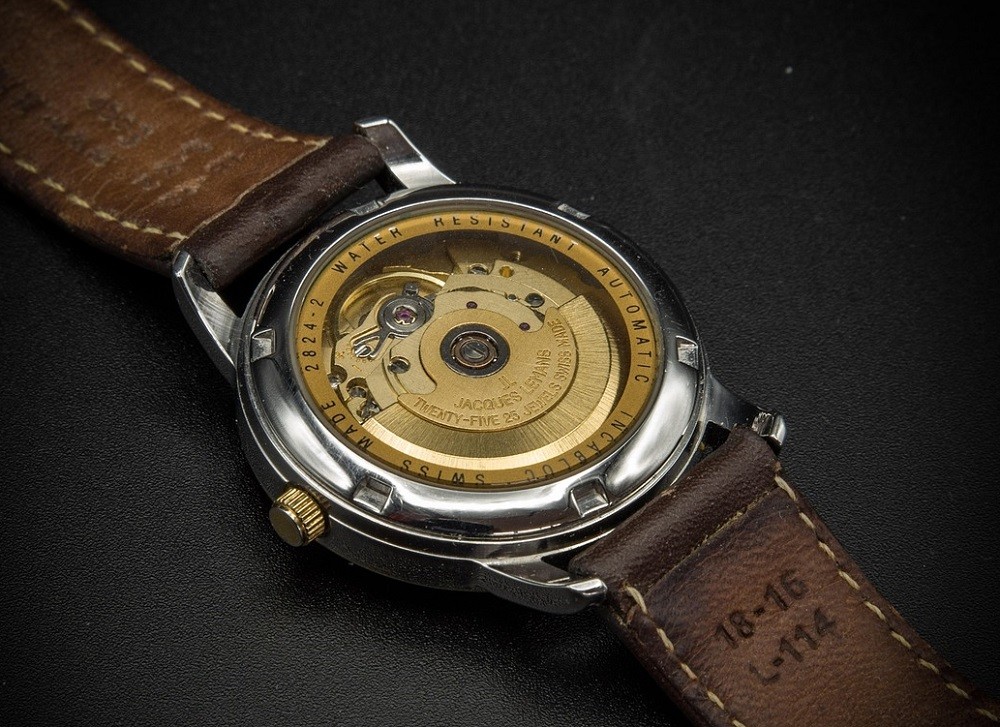
Automatic watches contain a weighted disc called a 'rotor' that swings as the watch moves. The swinging motion of the rotor helps keep the mainspring wound. Some automatic movements have a power reserve, which can store energy for several days. These power reserves ensure the watch will still be ticking even if you don't wear it for a day or two.
Manual wind watches do not have a rotor and need to be wound by hand. Many people who own manual wind watches on a regular basis wind them twice a day; once in the morning when they get up and again before they go to bed to ensure accurate timekeeping.
How To Set And Wind Mechanical Watches
To prevent damage to the stem and crown of your watch, always remove the watch from your wrist before setting and winding it.
Step 1: Hold Your Watch In Your Non-Dominant Hand
Some people prefer placing their watch directly in the palm of their hand and cradling it. Other people like to hold their watch by the lugs. Find what grip works best for you. Ensure you have a firm grip so you do not accidentally drop the watch while winding it.
Step 2: Pull Out The Crown
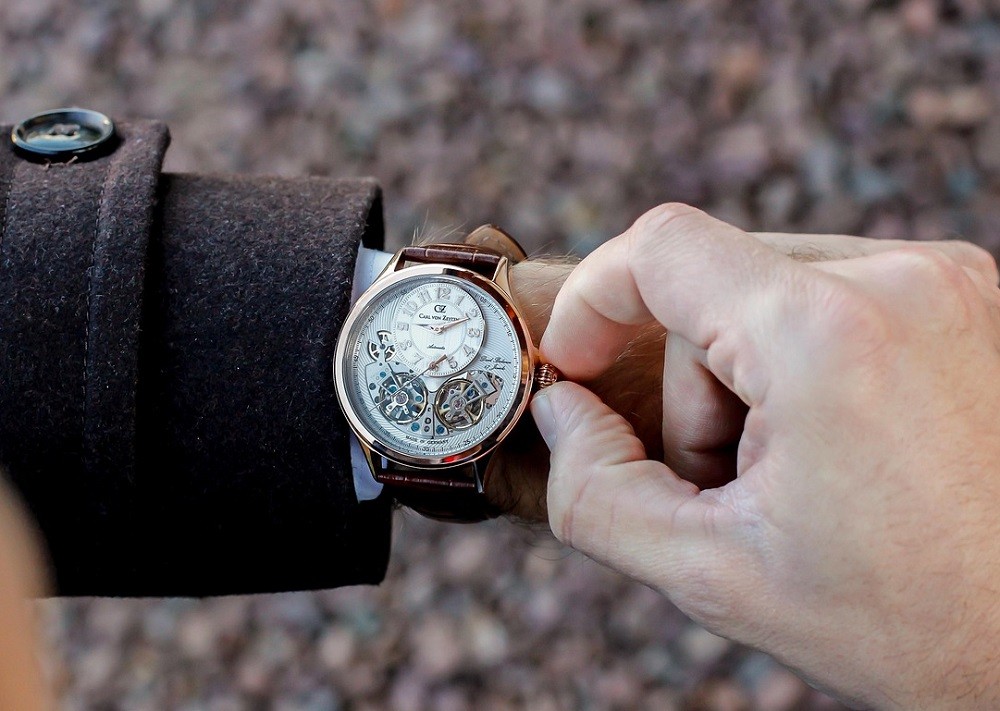
Once you have a firm grip on your watch, gently pull out the crown. You will feel the crown 'pop' out and see a small bit of the stem that connects the crown to the internal workings of the watch.
Depending on the number of complications your watch has, the crown may pop out just once or multiple times. Be sure to reference the manual of your watch to ensure you have the crown in the correct position to set the day, date, and time before winding.
The majority of watches on the market are made for right-handed people. This means the crown is on the right side of the watch when oriented in the correct position. A left-handed watch will have the crown on the left side.
There is no rule on where the crown can be. It all depends on the manufacturer, style and model. Some watches have the crown on the very top of the watch (called a 'bull crown') and sometimes they are askew on the side of a watch (at the 4, 4:30, or even 5 o'clock position).
Screw-Down Crown Tip: Some watches may have a screw-down crown. These are threaded crowns that seat against a small rubber gasket, preventing water from getting inside the watch. If your watch has a screw down crown, ensure it is completely unscrewed before attempting to pull the crown out. You will know if your watch has a screw-down crown if the crown does not pull out easily. If it does not pull out, do not try to force it as you may strip the threads and damage the crown.
Step 3: Set The Time
Before winding your watch, be sure to set the correct time. Simple watches with only 3 hands can be set very easily and without worry. We recommend always setting your watch forwards, not backwards, especially on vintage watches, to prevent damage to the movement.
If your watch has a day or day/date complication, be sure to change those before setting the time. Be very careful when changing the day and date if the time on your watch is between 9 and 3. The mechanisms for the day and date may be engaged. If you encounter this, please refer to our article Why You Should NEVER Change The Date On Your Watch Between 9 and 3.
Step 4: Wind Your Watch By Turning The Crown
With the correct day, date, and time set, it is time to wind your mechanical watch.
Winding a mechanical watch is a very simple process, but the position of the crown can vary depending on the brand and number of complications your watch has. Always refer to your watches manual to ensure you are in the right position before winding your watch.
Vintage manual wind watches can be wound by pushing the crown in all the way and turning it clockwise. You will feel some slight resistance and may hear the gears engaging as the mainspring tightens. As you wind, you will feel more tension on the crown. Once it gets really tough to wind, stop! You do not want to risk breaking anything on a vintage watch.
Modern manual wind watches are wound the same as their vintage counterparts but may include a slip clutch which is designed to disengage the crown from the mainspring once the mainspring is tightened all the way. Further winding will not do any damage; however, we recommend stopping as soon as the watch is fully wound to prevent any damage to the movement.
Automatic movements wind in a similar way to modern manual wind watches, but do not need to be fully wound. A few rotations of the crown will be enough to engage the second's hand. Once the watch begins to run, you can wind it some more or give it a gentle shake for a few seconds before placing it on your wrist.
Watches with automatic movements use the rotor to help keep energy stored. As long as you are moving your arm, your watch should continue to run.
Once your watch is running, you can put it back on your wrist.
General Mechanical Watch Care Tips:
Here are a few valuable tips we recommend remembering every time you wind your mechanical watch:
Always Rotate The Crown Smoothly
When winding your watch, rotate the crown smoothly and in a controlled motion. Sudden jerks, going too fast or being aggressive can break the crown, stem or even the internal workings of the movement. Always handle your watches with care.
Ensure Your Screw-Down Crown Is Screwed Down All The Way And Secure
If your watch has a screw-down crown, ensure it is screwed down all the way before putting it on your wrist. Even the slightest gap between the case and crown can let water seep in, damaging your watch.
NEVER Shake Your Watch To Make It Tick
Even though automatic movements use kinetic energy to help store energy, you should never shake your watch to start it. A violent shake can jostle parts inside the movement, loosening them, or causing them to break. Always wind your automatic movement first, ensuring they are functioning, before giving them a gentle shake.
NEVER Wear A Mechanical Watch When Performing High-Impact Activities
A sudden impact to your hands or body can be transferred to your watch, loosening parts or damaging the inner-workings of the movement. Some examples of high-impact activities include sports and construction work. Be mindful of your watch and remove it before engaging in activities such as these.
Summary
Setting and winding your mechanical watches is a simple task that should be treated like a ritual, not a chore. Your hands turning the crown helps bring the watch to life, starting up a little mechanical heart that beats to the tune of 300-600 times per minute (5-10 times a second).
Want to learn more about watches? Here are some other articles we have written on watches:
When you subscribe to the article, we will send you an e-mail when there are new updates on the site so you wouldn't miss them.
Article's Categories

Most Popular Articles



Article Latest Comments

Comments