

The Esteemed Gentleman Articles
Improve Your Table Manners In Minutes: Important Dining Etiquette Tips
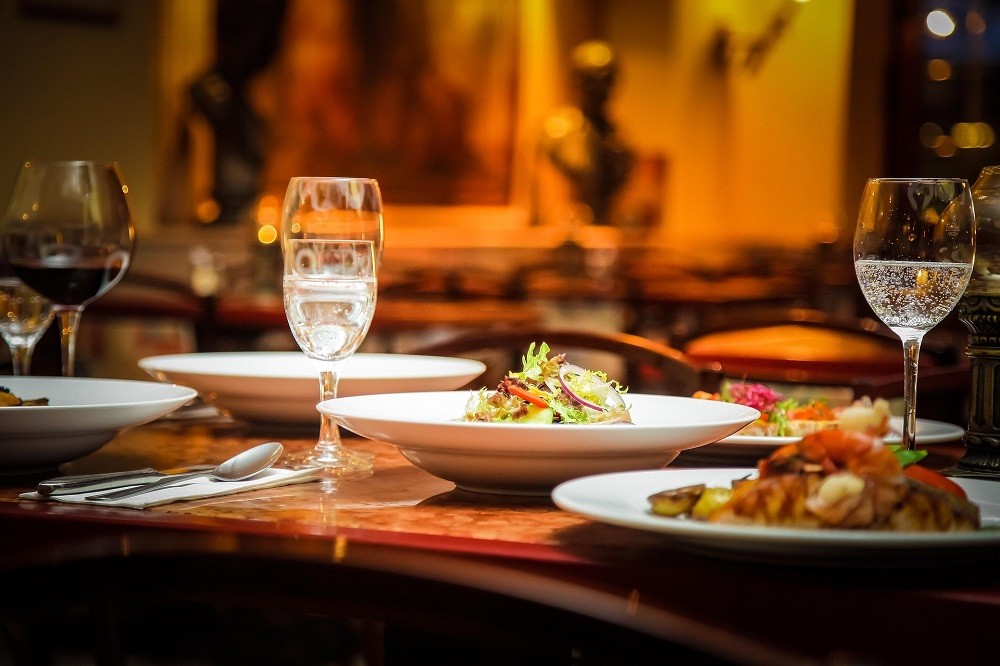
Basic dining etiquette and table manners are important regardless of the social setting you may find yourself in. You can tell a lot about someone based on how they act at the table, including their upbringing, refinement, and level of self-awareness.
In this article, we will review what we believe are the most important rules to follow for both basic dining etiquette and table manners. Remembering to apply these tips the next time you find yourself seated with friends, family, and loved ones.
Place Your Napkin On Your Lap As Soon As You Sit Down
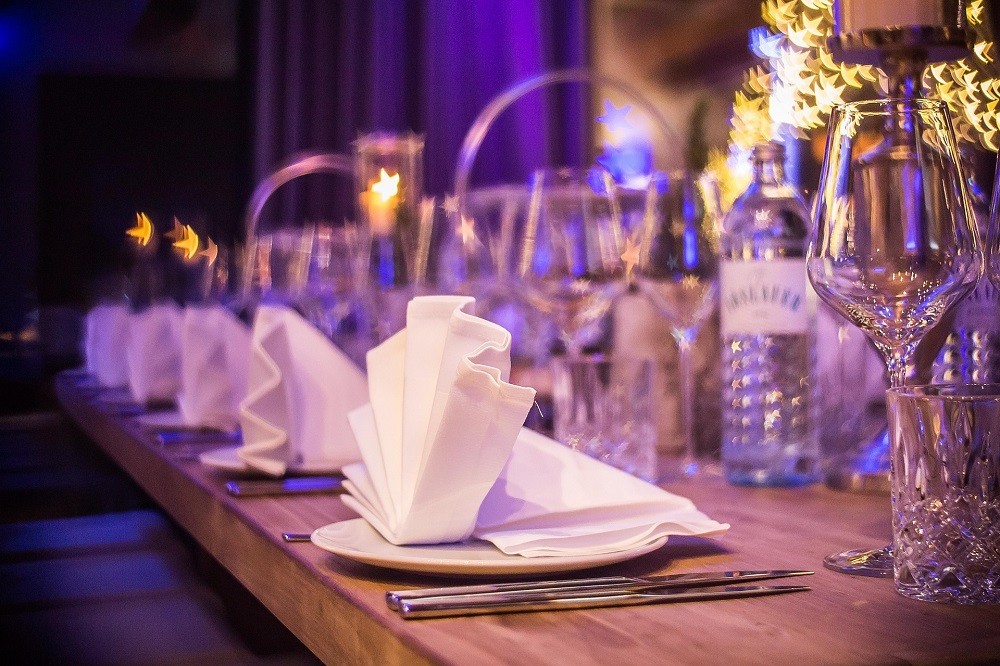
The first thing you should do as soon as you take your seat at the dining table is to unfurl your napkin and place it on your lap. The main purpose of a napkin is to prevent your clothes from getting dirty. Placing it on your lap right away means you do not need to worry about it later when your food arrives.
When placing your napkin on your lap, be sure that the folded end is towards you. This will prevent crumbs from falling into the napkin and landing on your legs when you go to remove the napkin.
For a more in-depth guide on napkin etiquette, read our article Napkin Etiquette Made Easy: Dos, Don'ts, And Must-Know Tips.
Remember Proper Posture While Sitting At The Table
Proper posture while seated at the table includes sitting straight, slightly rolling your shoulders back, and keeping your feet flat on the floor. Avoid slouching or hunching over as that may give the impression that you do not want to be at the table.
Keep your elbows off the table unless the table is clear of any food. Elbows on the table is fine between courses or at the end of the meal.
It is good etiquette to keep your hands above the table so no one suspects you are hiding anything or secretly on your phone. Resting your wrists on the edge of the table is perfectly acceptable.
Essential Place Setting:
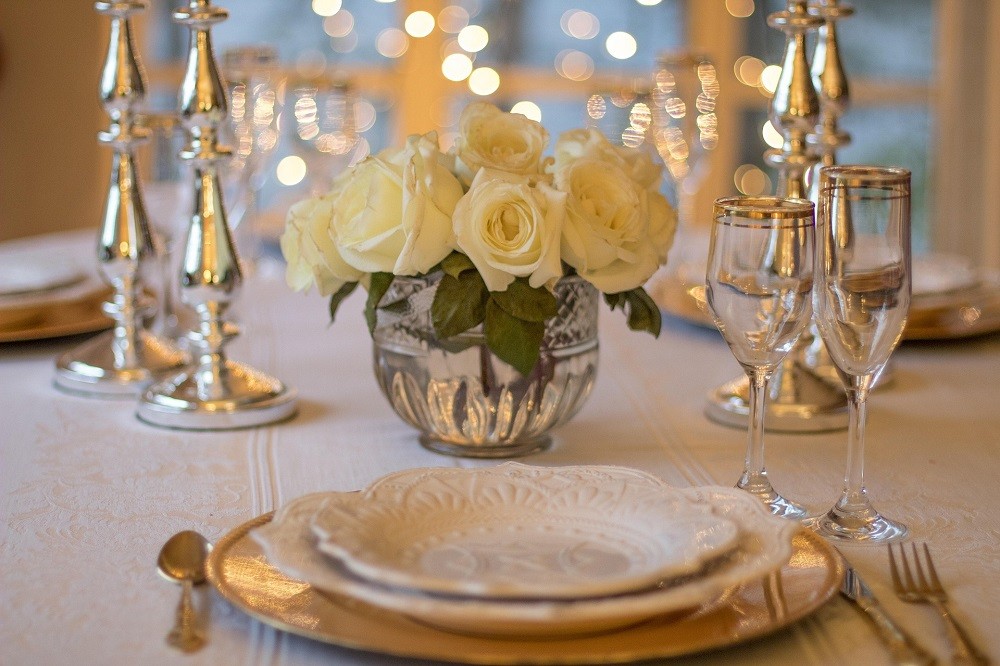
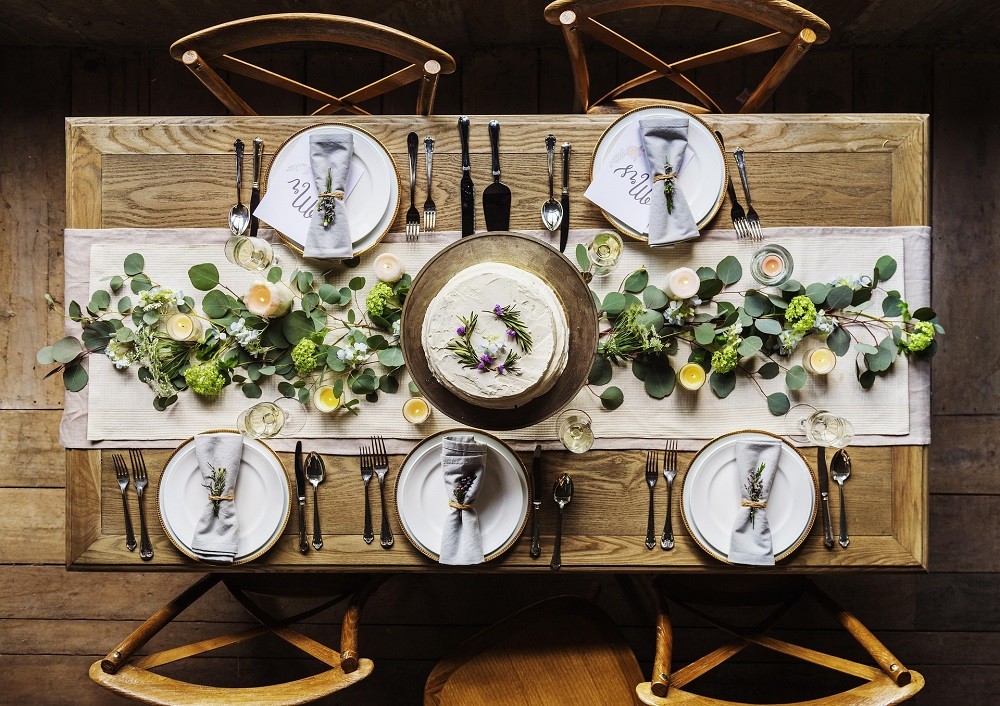
Your forks sit to the left of your dinner plate and your knives and spoons sit to the right. More elaborate place settings will feature multiple sets of cutlery. If you find yourself with more than one fork, knife, or spoon, the general rule is to work from the outside in towards your dinner plate.
A small plate may be situated above and to the left of your dinner plate. This is your bread plate, which may have a small butter knife laying across it. Your drinkware is located above and to the right of your dinner plate.
If you are unsure of which bread plate or glasses are yours or your neighbour's, hold out your hands vertically. Curl your index fingers in to your palm. Your left hand will form a lowercase 'b' and your right hand will form a lowercase 'd'; 'b' for bread, 'd' for drink.
Wait Until Everyone Has Been Served Before Eating
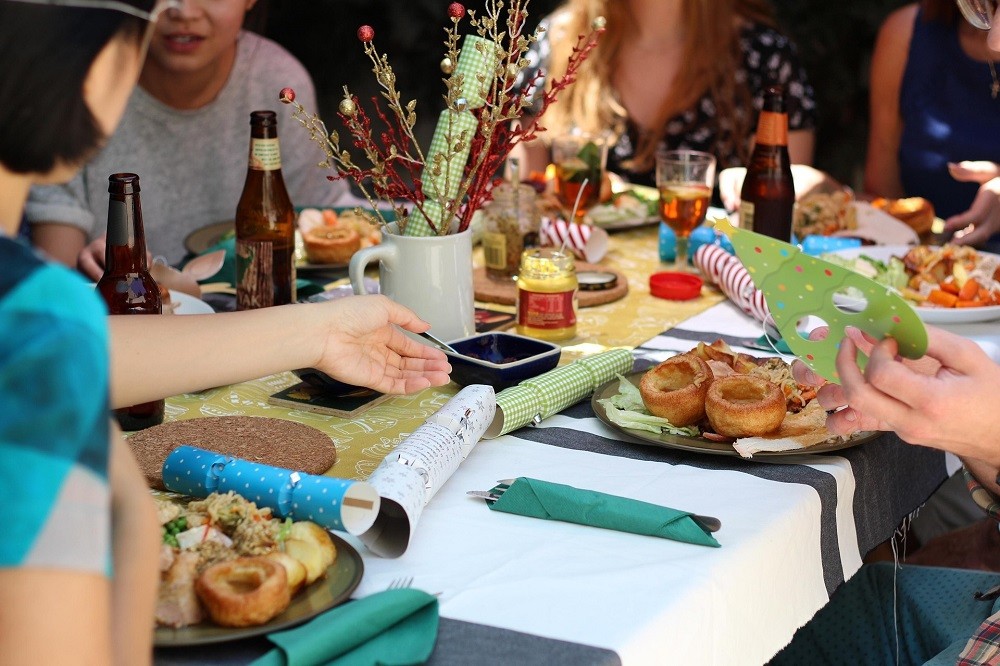
It is good etiquette to wait until everyone at the table has been served their meal before you start eating. This shows respect and consideration. Enjoying your meal at the same time as everyone else is a sign of equality and unity. Dining together is a shared experience that should be enjoyed by everyone.
If you are dining with a host or hostess, follow their lead. Do not eat until they do. A host (or hostess) may allow some people to begin eating before others if they fear their meal may get too cold while waiting. If you are the host, be considerate of those who receive their meal first. No one wants to eat a cold meal.
Do Not Reach Across The Table
If you need something that is not within reach, do not extend your arm over the table to grab it. You may accidentally dip your shirt cuff or arm into your food or knock something over. Instead, ask someone seated near the item you want if they can pass it to you.
Be sure to say 'please' and 'thank you'. Remember that now you are in charge of that item. Pay close attention and be ready to pass it along should someone else request it.
Offer Refills To Your Neighbours Before Filling Your Own Glass
A simple gesture at the dining table is to offer refills to those sitting beside you before filling up your own glass. This courteous act does not go unnoticed. However, this should only be done with water, and not alcohol.
Refilling alcoholic beverages for your neighbours at the dinner table can be misinterpreted as a sign that you think they should drink more. This can be rude, especially for someone who has to drive or has already reached their drink limit for the evening.
Keep Your Mouth Closed While Eating
Eating with your mouth closed is one of the most important rules of basic table manners. Showing your half-chewed food to others, even unintentionally, may cause them to feel repulsed. Never mind if a piece accidentally flies out of your mouth while you are talking.
We recommend taking smaller bites if you are going to engage in conversation with others at the table. Wait until you have fully swallowed your food before talking and try not to ask questions while the person you are conversing with is chewing; they may feel rushed or embarrassed that they cannot answer right away.
Belching at the table is uncouth. If you need to relieve yourself with a belch, try to do it discreetly into your napkin. Cover your entire mouth with your napkin and try to do it quietly as to not draw attention.
How To Excuse Yourself From The Table:
If you need to excuse yourself from the table, explaining where you are going or what you are doing is unnecessary. Simply saying "Excuse me. I will be right back." is enough.
Loosely fold your napkin from your lap and place it to the left of your dinner plate. Be sure to push in your chair before walking away from the table.
Regardless of why you are excusing yourself from the table, try not to take too long. People may start to worry if you do not return within 5-10 minutes. There is no need to explain where you went when you return to the table.
The Two Most Important Positions For Your Knife And Fork:
There are two important table manner silverware positions you must know; they are the 'resting position' and the 'finished position'. Imagine your dinner plate is the face of a clock.
The Resting Position:
The 'resting position' is when you want to take a break from eating to let your food digest or to converse with someone at the table. To place your silverware in the resting position, begin by laying your knife diagonally across the plate with the tip of the blade pointed at 10 o'clock and the end of the handle facing 4 o'clock.
Take your fork and turn it so the tines are facing down. Place the tines over the knife, pointing towards 2 o'clock, with the end of the handle facing 8 o'clock.
The Finished Position:
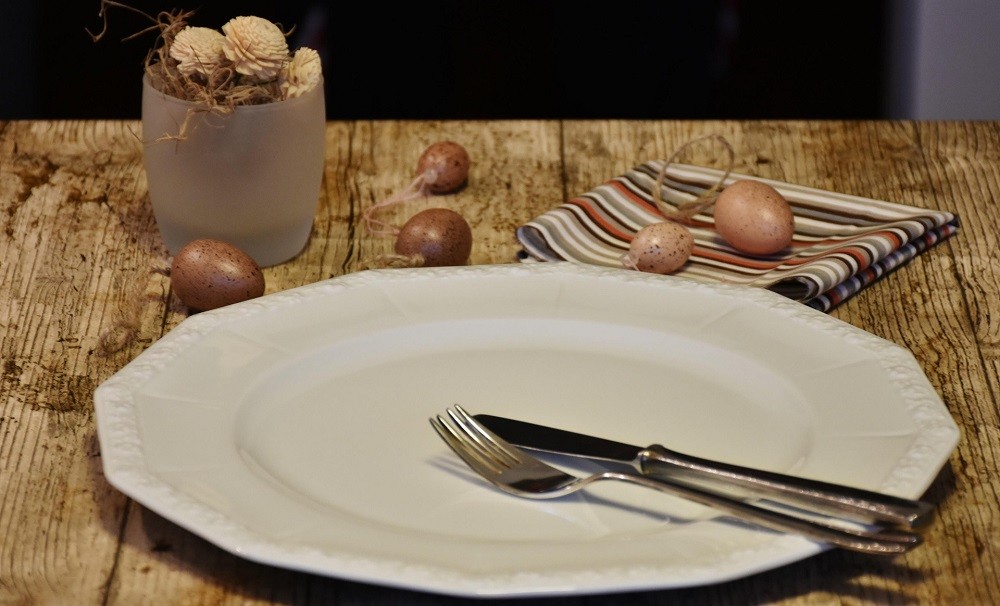
The 'finished position' is how you place your silverware when you are finished your meal. It is a universal sign that your plate is ready to be taken away. Place your fork and knife side by side diagonally across the plate with the tip of the blade and tines facing 10 o'clock and the end of the handles facing 4 o'clock.
Depending on where you live, there may be slight variations of how angled your silverware should be on your plate, but most servers and wait staff understand that when a fork and knife are laid side-by-side, the customer is finished eating.
Phones Do Not Belong On The Table
Phones should be turned off, or at least set to vibrate, before sitting down at a table for a meal. Keeping your phone out of sight and out of mind means you can spend more time connecting with the people around you.
Having your phone on the table (regardless of whether it is face-up or face-down) tells others in your presence that your phone is just as important as they are, even if you are not on your phone. It is best to keep your phone in your pocket and only check it if you are expecting an important call or text.
Pace Yourself At The Table
You should never strive to be the first one at the table with an empty plate or glass. Instead, pace yourself with those around you. Aim to eat and drink at the same speed as them so you all finish around the same time.
This way no one is waiting for others to finish and those with food on their plate are not feeling pressured to eat faster. If you eat too fast, some may think you did not savour your meal or that you are in a rush to go somewhere.
The same rule applies to alcoholic beverages. Before dining, set a limit and stay within it, especially if you have to drive. Paying for alcoholic beverages in cash can help you stay within your limit. Once the funds run out, it is time to switch to water or juice for the rest of the evening.
Always Pass The Salt And Pepper Together
A golden rule of dining etiquette is to always pass the salt and pepper together, even if someone only wants one of them. Having them travel together means they will never get separated nor will someone have to ask for the second shaker.
When passing the salt and pepper shakers, place them in front of the person who asked for them instead of directly in their hands. Sometimes salt and pepper shakers are heavy, or they could be slippery from being passed around numerous times. Doing this prevents the other person from accidentally dropping them and making a big mess.
Take A Bite Before Adding Salt Or Pepper To Your Meal
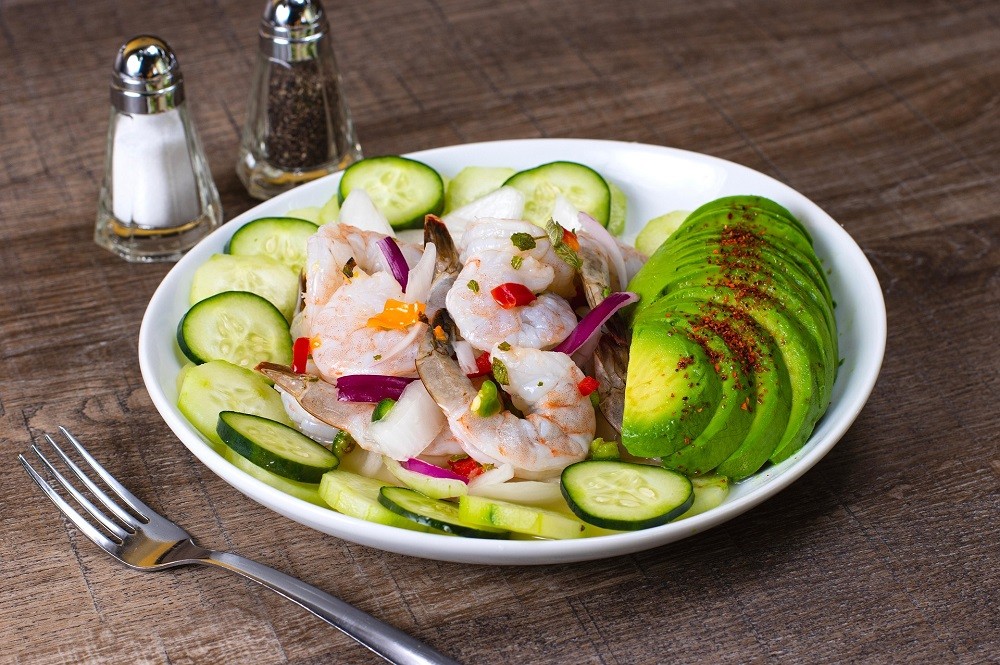
Resist the urge to reach for the salt and pepper as soon as your meal is placed in front of you. This can be disrespectful to the chef who has spent time carefully measuring and cooking ingredients to create a harmonious dish.
Be polite and take at least one bite before deciding if it needs more salt or pepper. If you find the meal to be under-seasoned or lacking flavour, add small amounts until it is to your liking.
Pass Shared Dishes And Plates The Right Way
Proper etiquette dictates that shared plates and bowls are passed from left to right. When the shared dish reaches you, remove some food from it and place it directly on your plate. If butter is being passed around, take a small amount and place it on your bread plate.
Use the utensils provided in the shared dish, not your own. Be sure that enough food remains on the communal dish to go around. This means you may have to take smaller portions to ensure everyone else at the table can enjoy it as well.
Summary
Now that you know the basics of dining etiquette and table manners, pay close attention to how others act at the table. You will be able to tell almost immediately who knows these valuable tips and who is lacking. Demonstrate your good skills and others will notice.
Want to learn more essential etiquette skills? Read these articles next:
When you subscribe to the article, we will send you an e-mail when there are new updates on the site so you wouldn't miss them.
Article's Categories

Most Popular Articles


Article Latest Comments

Comments